
OEM Temperature Controller Quality Control: A Production Plan
Plan OEM temperature controller production quality with approved baselines, incoming checks, end-of-line tests, measurement traceability, and release records.
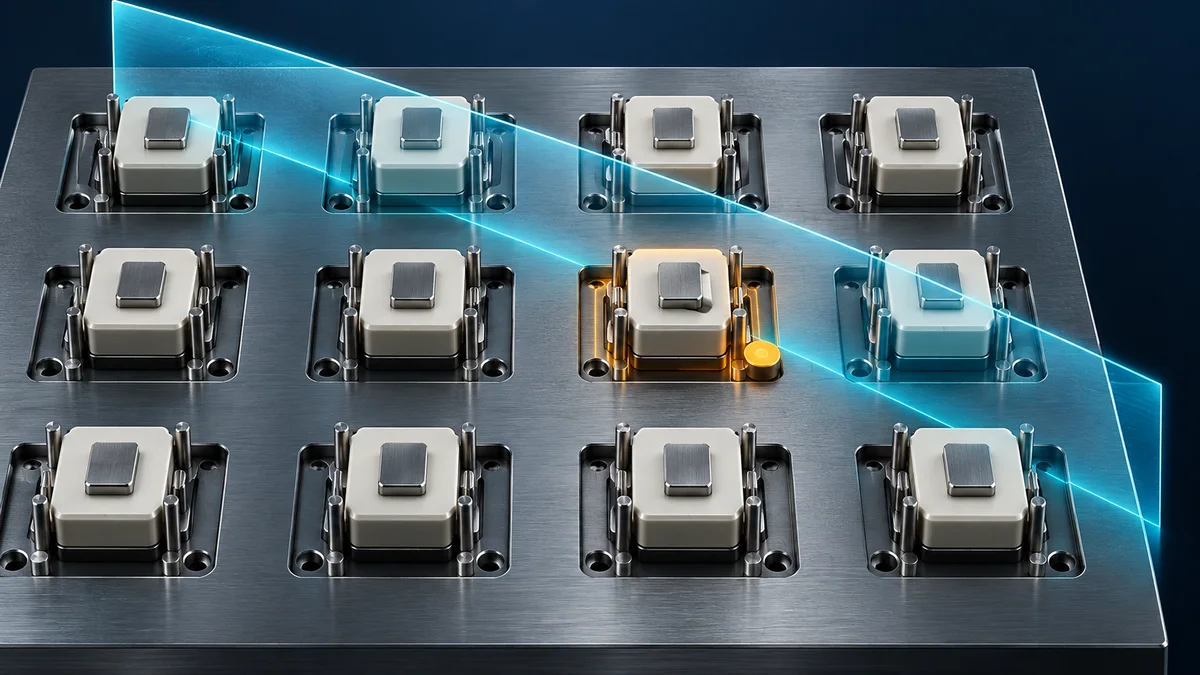
An OEM temperature controller production quality plan should answer a practical question: what evidence will show that every released lot still matches the product the buyer approved?
A passed prototype is necessary, but it is not the complete answer. Production introduces material receipts, approved substitutions, programming files, assembly processes, test fixtures, operators, rework, packaging, and lot records. The quality plan connects those variables to measurable acceptance criteria before volume production begins.
This guide gives buyers a framework for agreeing that plan with a supplier. It does not assume that every test, standard, sampling level, certificate, or record is included in a standard product or quotation.
Freeze the production baseline first
Quality cannot be judged against an undefined configuration. Before the pilot or first production lot, release one baseline that identifies:
- Buyer part number and supplier model or project number.
- PCB revision, bill of materials, and approved component alternatives.
- Bootloader, application firmware, parameter set, HMI, language pack, and communication-map revisions.
- Sensor, harness, connector, relay, power-supply, enclosure, label, manual, and packaging specifications.
- Programming files, calibration data, test limits, fixture revision, and test-software revision.
- Approved reference units, drawings, photographs, and cosmetic limits.
- Effective lot, purchase order, serial-number range, or other production cut-in point.
The baseline is broader than a “golden sample.” A sample can show appearance and behavior, but it cannot by itself identify an invisible firmware build, an approved component alternative, or the test limits used at release. Bind the physical reference to controlled files and records.
If the configuration is still changing, finish the firmware and hardware change-control plan before treating production results as comparable.
Build controls around risk and evidence
Do not copy a generic inspection checklist and test every characteristic with equal effort. Start from the product requirements and failure effects, then decide where each risk is best prevented or detected.
A useful control plan records, for every important characteristic:
- The requirement and acceptance limit.
- The process step where it can change.
- The prevention or inspection method.
- The test equipment, fixture, or reference needed.
- Sampling or 100% test requirement.
- Record to retain and the lot or serial identity it links to.
- Reaction when the result fails or trends toward a limit.
- Owner and approval authority.
ISO 9001:2026 describes a quality-management framework that includes planned and controlled operations, documented information, performance evaluation, and improvement. It can inform the management system around a production plan, but the buyer and supplier still need product-specific limits, test methods, records, and responsibilities.
Separate incoming, process, and final controls
One final functional test cannot detect every manufacturing risk. Divide the plan into layers.
Incoming verification
Confirm the identity and condition of parts that can affect fit, electrical ratings, sensing, switching, programming, or appearance. The plan should define how approved manufacturer part numbers, supplier lots, date codes where relevant, certificates requested by contract, dimensions, and visual condition are checked.
Incoming inspection is not proof that a component will work correctly in the finished controller. It verifies selected receipt characteristics and prevents unapproved or damaged material from entering production. Functional and safety-related behavior still needs appropriate downstream evidence.
First article and line setup
At the start of a new build, new revision, transferred line, changed fixture, or other agreed trigger, verify that the released package can produce an acceptable unit. Check programmed versions, critical component identities, assembly setup, labels, enclosure fit, test-fixture configuration, and a complete functional cycle before releasing the rest of the lot.
The first article is a production-process check, not a replacement for the application validation described in the prototype validation test plan.
In-process controls
Use process controls where a defect is difficult to detect after enclosure assembly. Examples may include polarity and orientation, connector seating, soldering, torque where specified, insulation placement, protective coating coverage where required, programming completion, and intermediate electrical checks.
When a contract invokes an electronics-workmanship standard, name the exact document, revision, classification, and any project exceptions. IPC-A-610J defines visual acceptance requirements for electronic assemblies, while IPC J-STD-001 addresses soldering process controls and materials. The two scopes are related but not interchangeable, and neither automatically defines the complete controller test plan.
Design the end-of-line test around product behavior
An end-of-line test should prove that the assembled unit has the correct identity and performs the functions selected for that production configuration. Depending on the agreed product, the sequence may cover:
- Hardware, firmware, HMI, parameter, and communication-map identity.
- Power-up, reset, retained settings, and defined safe state.
- Sensor inputs across agreed simulated points, including open- or short-circuit handling where specified.
- Relay or other output actuation under safe test loads, with the correct sequence and interlocks.
- Display segments, keys, touchscreen regions, indicators, buzzer, and accessible menus.
- Communication addressing and selected register reads or writes when that interface is included.
- Alarm inputs and outputs, current inputs, humidity inputs, or auxiliary functions only when present in the released configuration.
- Final visual, label, connector, accessory, and packaging checks.
Define stimulus, expected result, tolerance, dwell time, pass/fail logic, and the data stored. A screen that lights or a relay that clicks is not enough evidence if the requirement concerns measurement, timing, sequencing, or fault response.
Production tests also do not replace the safety, EMC, environmental, endurance, or finished-equipment evaluation required by the applicable project. IEC 60730-1:2022 covers construction, operation, and testing of automatic electrical controls within its stated scope, including operating values, times, and sequences where they relate to equipment safety. Which standards and assessments apply must be determined for the target product and market.
Make measurement results traceable and fit for purpose
If temperature, resistance, current, voltage, timing, humidity, or dimensions determine acceptance, define the complete measurement system—not just the tester model.
Record the measured property, method, range, tolerance, fixture, software, environmental conditions where relevant, equipment identity, calibration status, and the rule used to decide conformity. The test system must be capable of separating an acceptable unit from a nonconforming one with suitable margin for the requirement.
NIST explains that metrological traceability is a property of a measurement result, supported by a documented unbroken chain of calibrations in which each link contributes to uncertainty. Merely owning a calibrated instrument does not automatically make every result traceable or fit for purpose (NIST traceability policy and FAQ). Ask for the measurement evidence the project actually needs instead of using “NIST traceable” as an unsupported label.
Control failures, rework, and retest
The quality plan needs a reaction path before the first failure occurs:
- Segregate affected units and identify the last known accepted point.
- Record the symptom, test station, configuration, lot, operator or process, and diagnostic result.
- Decide whether the issue is an isolated unit, fixture problem, material lot, programming error, or process trend.
- Define who can approve use-as-is, rework, repair, scrap, or a temporary deviation.
- Use controlled rework instructions and identify repaired units when the agreement requires it.
- Repeat affected tests and any regression checks needed after rework.
- Expand containment to earlier or later lots when evidence shows the boundary is uncertain.
Do not silently change a limit so a failing lot passes. A temporary deviation should identify the affected quantity, technical rationale, risk review, approval, expiry, and corrective action.
Keep lot history useful for field support
Traceability should let the buyer and supplier answer four questions without reconstructing the project from email:
- Which configuration was built?
- Which material and process records apply?
- Which tests were run, with what result and equipment status?
- Where did the affected units ship?
The required granularity may be lot-level or unit-level depending on risk, service needs, and commercial scope. Agree identification format, record contents, retention period, access rights, and response time. Do not assume that serialization, cloud records, or a particular retention period is standard unless it appears in the specification and agreement.
Use a buyer release pack
Before approving mass production or each agreed shipment stage, ask for a concise release pack containing the evidence selected for the project:
- Released configuration index and approved changes.
- First-article or line-release result where required.
- Material or process records explicitly required by the purchase specification.
- Assembly and functional-test summary, including quantities tested, passed, failed, reworked, and released.
- Measurement-equipment status relevant to reported results.
- Open deviations, concessions, or corrective actions.
- Lot or serial mapping and shipment identity.
- Approved label, manual, accessory, and packaging revisions.
The pack should be proportionate. The objective is not to collect documents that nobody reviews; it is to preserve enough evidence to make release and field decisions.
Define the Beamform project scope explicitly
Beamform’s published product pages describe the standard configuration of each listed controller platform. For example, the BF-6800 / 6810 refrigeration controller and the BF-6920 / 6921 touchscreen platform provide different starting points. Optional functions and customer-specific PCB, relay, sensor, power, enclosure, firmware, HMI, communication, branding, packaging, production-test, traceability, and reporting requirements must be evaluated against the actual project.
Final capability, compliance work, test coverage, sampling, records, cost, MOQ, tooling, and schedule are confirmed only after specification review. Use the OEM RFQ checklist, then contact Beamform with the application environment, electrical diagram, I/O list, panel dimensions, target markets, certification needs, expected prototype/pilot/production quantities, and proposed acceptance plan.
Frequently asked questions
Is a passed prototype enough to release mass production?
No. It shows that the tested prototype met the agreed checks. Production release also needs a frozen configuration, production instructions, process controls, fixtures, test limits, reaction rules, and traceable records.
Should every temperature controller receive a functional test?
That depends on risk, product architecture, process capability, and contract. Buyers should define which characteristics require 100% testing and which may use an agreed sampling plan. Do not infer the answer from a generic factory checklist.
Does an ISO 9001 certificate prove that a particular lot passed?
No. A quality-management-system certificate and product- or lot-specific acceptance evidence answer different questions. Request the records tied to the configuration and shipment you are accepting.
What should an approved reference sample contain?
Identify the physical unit, hardware and software revisions, approved appearance, parameter set, label, accessories, packaging, and the controlled documents that define characteristics the sample cannot reveal.
Who should set the acceptance limits?
The buyer owns the finished-equipment and market requirements; the supplier contributes design and process knowledge. Limits, methods, sampling, and approval authority should be agreed before production, with unresolved assumptions recorded rather than hidden.